

Keynote Speakers
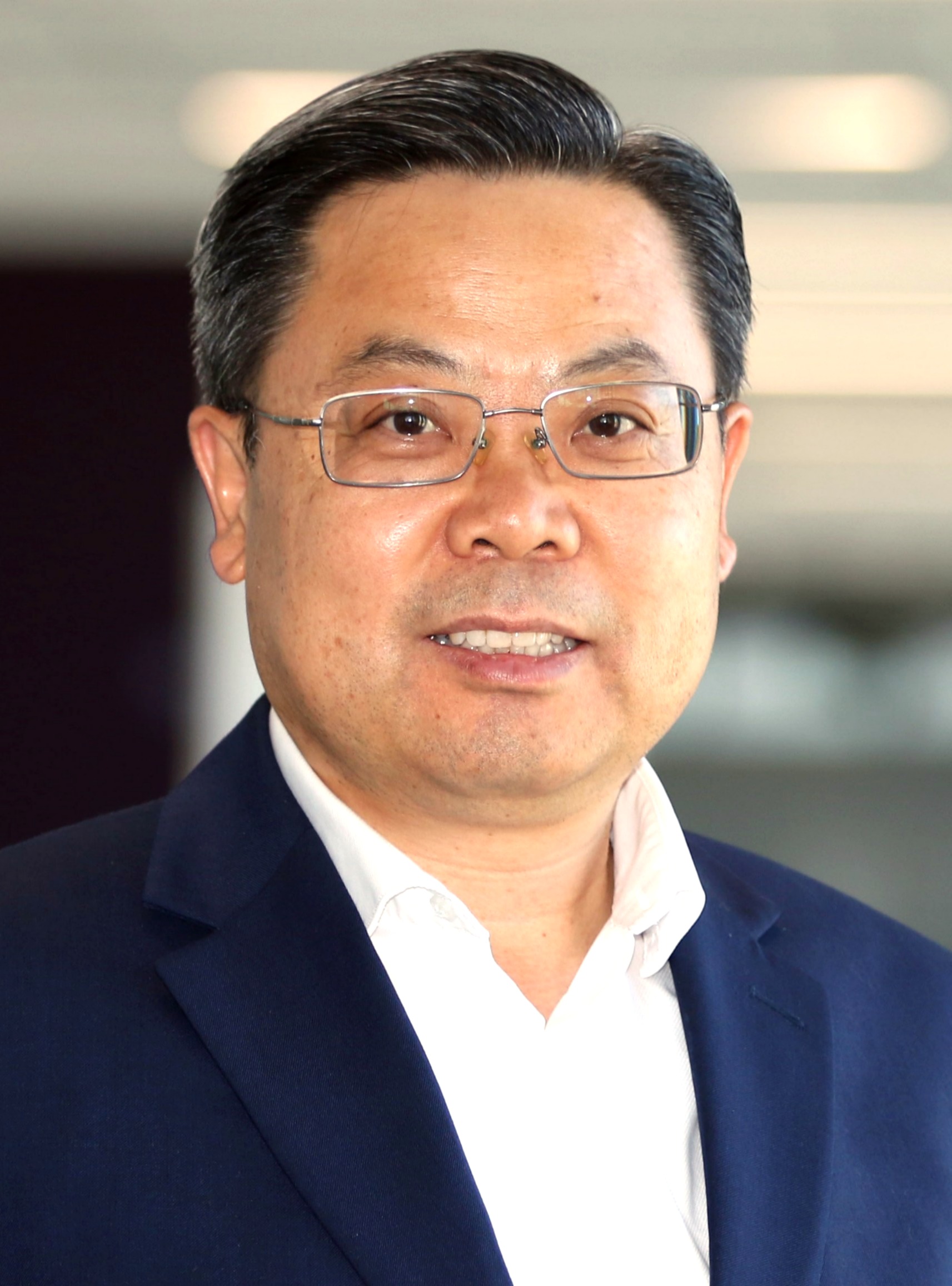
Prof. Xianbin Wang,
Western University, Canada, IEEE FELLOW
Dr. Xianbin Wang is a Distinguished University Professor and a Tier-1 Canada Research Chair in Trusted Communications and Computing at Western University, Canada. His current research interests include 5G/6G technologies, Internet of Things, machine learning, communications security, and intelligent communications. He has over 800 highly cited journals and conference papers, in addition to over 30 granted and pending patents and several standard contributions. Dr. Wang is a Fellow of IEEE, a Fellow of the Canadian Academy of Engineering, and a Fellow of the Engineering Institute of Canada. He has received many prestigious awards and recognitions, including the IEEE Canada R. A. Fessenden Award, Canada Research Chair, Engineering Research Excellence Award at Western University, Canadian Federal Government Public Service Award, Ontario Early Researcher Award, and 12 Best Paper Awards. He is currently a member of the Senate, Senate Committee on Academic Policy, and Senate Committee on University Planning at Western. He has been involved in many flagship conferences, including ICC, GLOBECOM, VTC, PIMRC, WCNC, CCECE, and ICNC, in different roles, such as General Chair, TPC Chair, Symposium Chair, Tutorial Instructor, Track Chair, Session Chair, and Keynote Speaker. He has served as the Editor-in-Chief, Associate EiC, area editor, associate editor, and guest editor for over ten journals. He was nominated as an IEEE Distinguished Lecturer multiple times by different IEEE technical societies. He has served on the Fellow Committees of IEEE and IEEE Communications Society. He was the Chair of the IEEE ComSoc Signal Processing and Computing for Communications (SPCC) Technical Committee and the Central Area Chair of IEEE Canada.
Speech Title: 6G as a Platform: Toward AI- and Trust-Native Connected Systems
Abstract: The unprecedented evolution of wireless technologies from 1G to 6G, coupled with their rapid convergence with AI and vertical industry applications, is fundamentally reshaping future networked systems. To effectively support diverse and dynamic applications, future 6G networks must evolve beyond connectivity by intelligently enabling beyond communication services and trusted collaboration among distributed devices.
This presentation begins by examining the fundamental challenges in 6G enabled systems and introducing a novel AI- and trust-native architectural paradigm. Our new wireless design strategies and the ongoing research activities for intelligent concurrent provisioning of beyond communication services, e.g. localization, sensing and synchronization will be then presented. To achieve the operation goals of complex networked systems, this talk will further explore the critical aspects of trusted machine collaboration in 6G-enabled networked systems. Specifically, key enabling technologies and mathematical frameworks for task-specific trust evaluation, trusted collaborator selection, and effective task completion will be presented. Furthermore, generative AI-driven autonomous trust orchestration, based on a new concept of semantic chain-of-trust, agentic AI and hypergraph models will be discussed as tools to establish, maintain, and adapt spatiotemporal trust relationships among devices for collaborative task completion.
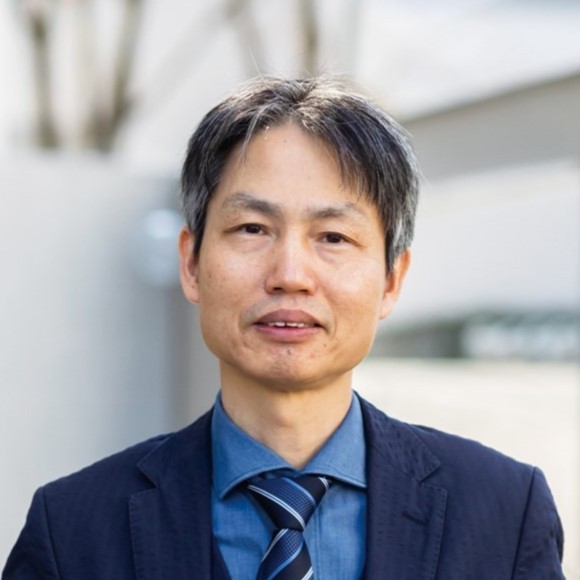
Prof. Qun Jin,
Waseda University, Japan
Qun Jin is a professor in the Department of Human Informatics and Cognitive Sciences, Faculty of Human Sciences, Waseda University, Japan. He has been extensively engaged in research works in the fields of computer science, information systems, and human informatics, with a focus on understanding and supporting humans through convergent research. His recent research interests cover behavior and cognitive informatics, health informatics, artificial intelligence and machine learning, LLM and generative AI, AI agents, big data, blockchain, trustworthy platforms for data federation, sharing, and utilization, cyber-physical-social systems, and applications in healthcare and learning support. He authored or co-authored several monographs and more than 460 refereed papers published in academic journals and international conference proceedings. He is a foreign fellow of the Engineering Academy of Japan (EAJ) and a fellow of the Asia-Pacific Artificial Intelligence Association (AAIA). More information can be found at https://researchmap.jp/jinqun/?lang=en.
Speech Title: Understanding and Supporting Humans Through AI and Big Data
Abstract:The purpose of science and technology development around the world is shifting to human well-being. The grand challenges facing human society in the twenty-first century, such as protecting human health and promoting human well-being, cannot be solved by one discipline alone. To address these challenges and social issues, approaches and insights from a wide range of fields have been actively promoted through convergent research facilitated by cross-disciplinary collaboration and innovation. In this talk, after introducing the promising paradigm of convergent research, we will depict our vision on computing for human well-being and technology for the common good. We will further present our recent work in understanding and promoting human health through convergent research and with technology convergence of artificial intelligence and big data, from comprehensive health data analysis for healthcare, to living support and well-being promotion for elderly people.
Prof. Jianhua Ma,
Hosei University, Japan
Jianhua Ma is a professor in the Faculty of Computer and Information Sciences, Hosei University, Tokyo, Japan. He was the Director of Hosei University Institute of Integrated Science and Technology in 2024 FY. He served as the Chair of Digital Media Department of Hosei University in 2011-2012. His research interests include pervasive computing, social computing, wearable technology, IoT, smart things, and cyber intelligence. Ma is one of pioneers in research on Hyper World and Cyber World (CW) since 1996, and was a co-initiator of the first international symposium on Cyber World in 2002. He first proposed Ubiquitous Intelligence (UI) towards Smart World (SW), which he envisioned in 2004, and was featured in the European ID People Magazine in 2005. He has conducted several unique CW-related projects including the Cyber Individual (Cyber-I), which was featured by and highlighted on the front page of IEEE Computing Now in 2011. He has published more than 300 papers, co-authored/edited over 15 books and 30 journal special issues, and delivered over 30 keynote speeches at international conferences. He has founded three IEEE Congresses on ‘Smart World’, ‘Cybermatics’ and ‘Cyber Science and Technology’, respectively, as well as IEEE Conferences on Ubiquitous Intelligence and Computing (UIC), Pervasive Intelligence and Computing (PICom), Dependable, Autonomic and Secure Computing (DASC), Cyber Physical and Social Computing (CPSCom), Internet of Things (iThings), Digital Twin, and Metaverse. He is a Chair of IEEE SC Hyper-Intelligence Technical Committee, a Co-chair of IEEE SMC Technical Committee on Cybermatics, and a founding chair of IEEE CIS Technical Committee on Smart World.
Speech Title: From Personal Big Data to Personalized Intelligence
Abstract:Personal Data is getting bigger and bigger due to the popularity of smartphones, wearables, ambient devices, IoT, social media, cloud and edge services, etc. Personal big data (PBD) is a large and continuous collection of data from various sources in rich multimode as personal lifelogs experienced in physical and cyber environments. Such PBD can be used not only for knowing more about a person but also making personalized intelligence (PI) in emerging cyber-physical integrated hyperworld. This talk will first discuss the latest research on recognition of personal behavior, emotion and personality based on increasing personal big data, and then present a novel way to create a group of artificial intelligent buddies or agents that may help a real individual (Rea-I) better living, working and doing other activities in the hyperworld. These personal intelligent buddies/agents, generally known as X-Is, can be in various forms including Cyber-I, Wear-I, Robo-I, Ambi-I, Web-I, Social-I, Health-I, and so on to serve and assist a person in different life aspects or ways. Potential emerging applications are foreseen, and key technological challenging issues are discussed on using personal big data for personalized intelligence.
Invited Speakers
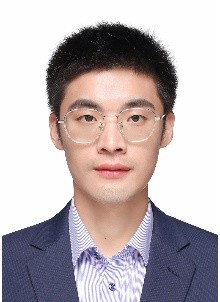
Prof. Hongping Gan, Northwestern Polytechnical University, China
Hongping Gan is an Associate Professor and Ph.D. Supervisor at the School of Software, Northwestern Polytechnical University, and a member of the Professional Committee on Data Security Industry of China. In the past three years, he has published more than 30 high-quality papers as the first or corresponding author in leading international journals and top conferences including IEEE TIP, TGRS, TCI, TCYB, TCSVT, TCE, TNSM, CVPR and AAAI. He has been the principal investigator of several research projects, including the General Program and Youth Program of the National Natural Science Foundation of China, the Natural Science Foundation of Shaanxi Province, and the Technological Frontier Special Project. He was invited to attend the 2021 China Airshow in Zhuhai, the 2023 World UAV Congress and the 2024 China Defense Electronics Exhibition, where he delivered invited presentations.
Speech title: Interpretable Deep Unfolding Networks for Compressive Sensing
Abstract: In the era of big data, compressive sensing (CS) has provided a revolutionary solution for efficient signal acquisition and reconstruction. However, traditional algorithms have long been constrained by bottlenecks such as complex manual parameter tuning, low computational efficiency, and insufficient real-time performance. In recent years, deep unfolding networks (DUN), by integrating the dual advantages of model-driven optimization and data-driven learning, have significantly improved reconstruction speed and accuracy, emerging as a cutting-edge breakthrough in the field of CS. Therefore, this report will analyze state-of-the-art DUN method for CS, explain several classic network architectures, and explore future development trends of this technology.


